
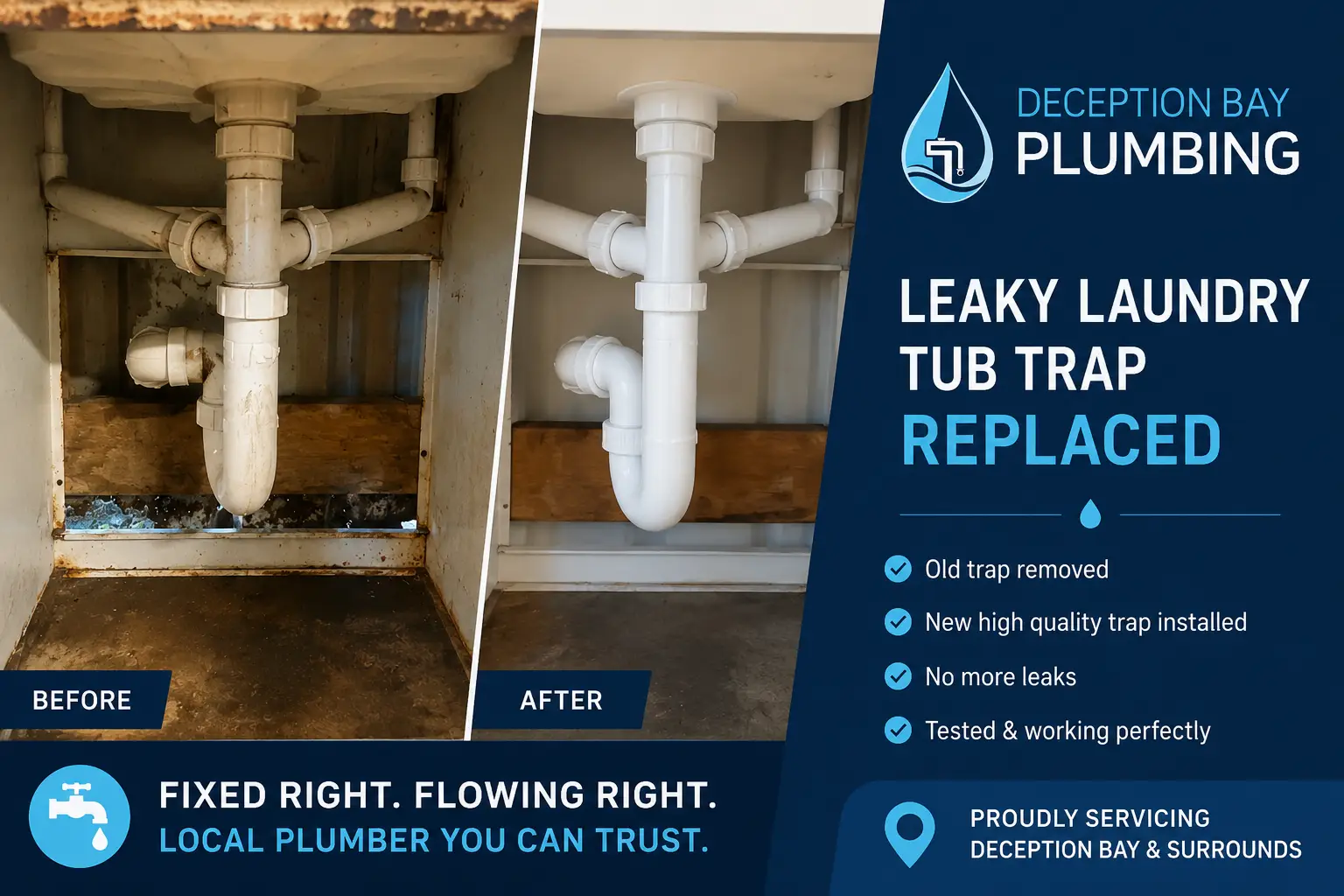
The Importance of Maintaining Healthy Laundry Tubs and Waste Traps
The laundry is one of the busiest areas of any home, with washing machines, laundry tubs and sinks all relying on a properly functioning drainage system. While many homeowners focus on keeping their washing machine in good condition, the plumbing underneath the laundry tub is often overlooked. A healthy waste trap plays a vital role in preventing leaks, blockages, unpleasant odours and costly water damage.
At Deception Bay Plumbing, we regularly replace leaking laundry tub traps and repair damaged waste pipes throughout Deception Bay and the surrounding suburbs. Many of these issues develop slowly over time, meaning homeowners often don't realise there's a problem until water starts leaking into cupboards or onto the floor.
What Is a Laundry Tub Trap?
The curved section of pipe located beneath your laundry tub is known as the waste trap or P-trap. Its purpose is much more important than simply carrying wastewater away.
The trap is designed to hold a small amount of water after every use. This water forms a seal that prevents unpleasant sewer gases from travelling back into your home through the drainage system. Without this water seal, foul odours and potentially harmful gases could enter your laundry and nearby living areas.
The trap also provides a convenient point for accessing and clearing minor blockages if they occur.
Why Laundry Tub Traps Fail
Laundry tubs are exposed to far more than just water. Every load of washing sends lint, detergent residue, dirt, grease, pet hair and cleaning chemicals through the waste system.
Over time these materials can build up inside the trap and connecting pipework, restricting water flow and placing additional stress on plumbing fittings.
Common reasons we replace laundry tub traps include:
Cracked or split plastic traps
Perished rubber seals
Loose compression fittings
Poorly installed plumbing
Blockages caused by lint and debris
Damage from accidental impacts while storing items beneath the sink
Age-related deterioration
Even a slow drip can eventually damage cabinetry, flooring and wall linings if left unattended.
Signs Your Laundry Trap Needs Attention
Many plumbing problems begin with subtle warning signs.
You should arrange an inspection if you notice:
Water leaking underneath the laundry tub
Damp cupboards or swollen cabinetry
Musty smells around the laundry
Slow draining water
Gurgling sounds after draining
Water pooling around pipe joints
Visible cracks in plastic fittings
Sewer odours coming from the waste
Addressing these issues early is almost always less expensive than waiting until significant damage occurs.
The Hidden Cost of Small Leaks
One of the biggest misconceptions homeowners have is that a small leak isn't urgent.
Unfortunately, even a slow drip can cause extensive damage over time.
Water can soak into cabinetry, wall framing and flooring where it may remain unnoticed for months. This creates the perfect environment for mould growth, timber rot and structural deterioration.
Insurance companies may also decline claims if damage has clearly resulted from long-term neglect rather than a sudden plumbing failure.
Replacing a worn trap is a relatively inexpensive repair compared to replacing kitchen or laundry cabinetry affected by water damage.
Preventing Blockages
Laundry waste systems handle a surprising amount of debris.
Lint from clothing is one of the biggest contributors to blocked waste pipes. Combined with soap residue and fabric softener, it gradually coats the inside of the drainage system.
To help prevent blockages:
Clean your washing machine's lint filter regularly.
Avoid washing excessive amounts of pet hair into the drain.
Don't pour paint, plaster or building materials into the laundry sink.
Flush the sink occasionally with hot water.
Have slow drains inspected before they become completely blocked.
Preventative maintenance can significantly extend the life of your plumbing.
Why Professional Installation Matters
Although replacement laundry traps are readily available from hardware stores, incorrect installation can create ongoing problems.
Common DIY mistakes include:
Incorrect pipe alignment
Poor fall on waste pipes
Over-tightened compression fittings
Under-tightened sealing nuts
Missing sealing washers
Incorrect trap sizes
Non-compliant plumbing configurations
A licensed plumber ensures the trap is correctly aligned, properly sealed and compliant with Australian plumbing standards.
Professional installation also reduces the likelihood of future leaks developing after the repair.
Maintaining Good Plumbing Hygiene
Healthy plumbing isn't just about preventing leaks—it also helps maintain a cleaner and healthier home.
Waste traps that remain clean and functional help reduce:
Unpleasant odours
Bacterial growth
Mould development
Moisture damage
Insect attraction
Regular maintenance also allows plumbers to identify other developing issues before they become major repairs.
When Should You Replace a Laundry Trap?
There isn't a fixed replacement interval for laundry waste traps, but older plastic traps can become brittle with age.
Replacement is recommended if:
The trap is leaking.
The fittings no longer seal properly.
The trap has cracked.
Repeated blockages continue occurring.
The plumbing has been modified multiple times.
The waste system is being upgraded during a renovation.
Many homeowners choose to replace older traps during laundry renovations as an inexpensive preventative measure.
Routine Plumbing Inspections Save Money
Many plumbing issues develop slowly over several years.
A simple visual inspection during routine maintenance can identify:
Loose compression fittings
Early signs of leaks
Water staining
Pipe movement
Deteriorated seals
Corrosion
Poor drainage
Fixing these problems early is almost always more affordable than waiting for a complete failure.
Why Choose Deception Bay Plumbing?
At Deception Bay Plumbing, we provide professional plumbing repairs throughout Deception Bay and surrounding suburbs. Whether you're dealing with a leaking laundry tub trap, blocked waste pipe or damaged plumbing beneath your sink, we can quickly identify the cause and provide a reliable, long-lasting repair.
We take pride in delivering quality workmanship using durable plumbing components that are built to last. Every repair is completed with attention to detail, ensuring your plumbing system operates efficiently and safely.
If you've noticed water leaking beneath your laundry tub, unpleasant odours, slow drainage or ageing pipework, don't ignore the warning signs. Addressing small plumbing problems early can prevent expensive repairs and protect your home from unnecessary water damage.
Contact Deception Bay Plumbing today for expert advice, professional plumbing repairs and friendly local service you can rely on. Keeping your laundry plumbing in top condition is one of the simplest ways to protect your home, improve drainage performance and avoid costly surprises in the future.