
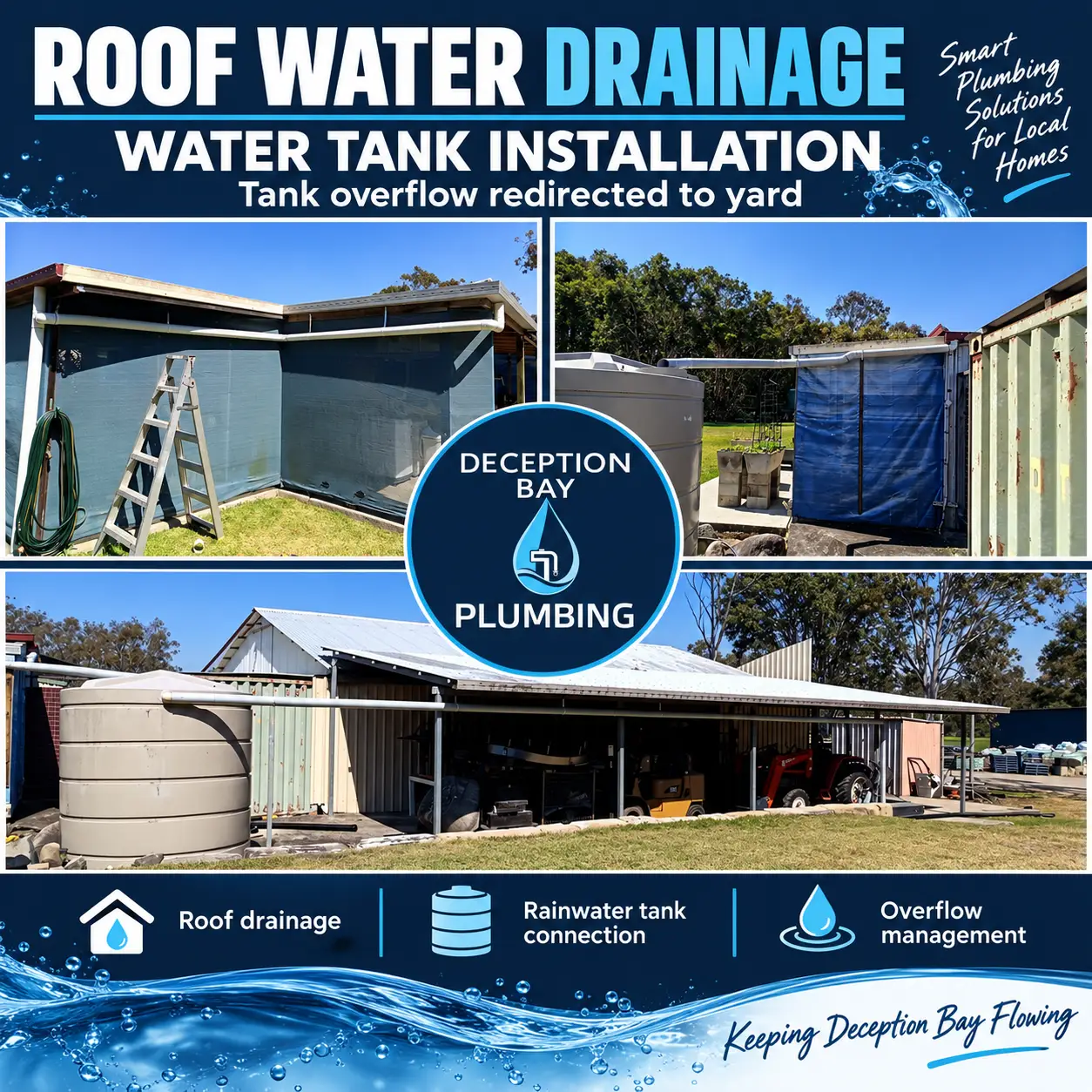
Effective roof water drainage is an important part of protecting your property from water damage, erosion and unwanted stormwater runoff. When rainwater is collected from roofs, sheds and other structures, it needs to be directed somewhere suitable.
Installing a rainwater tank provides an excellent way to capture and store this water, but the tank's overflow also needs to be properly considered.
Deception Bay Plumbing provides practical plumbing solutions for roof drainage, rainwater tank connections and controlled tank overflow systems throughout Deception Bay and surrounding areas.
Whether you are installing a new water tank, upgrading existing roof drainage or dealing with water flowing across your yard, a properly planned drainage system can help keep excess water under control.
Why Proper Roof Water Drainage Matters
During heavy rainfall, a large amount of water can be collected from even a relatively small roof area. If gutters, downpipes and drainage pipework are not correctly arranged, water can discharge directly beside buildings, pool around structures or flow across lawns and garden areas.
Uncontrolled roof water can contribute to erosion, saturated ground and ongoing drainage problems. It can also become an issue between neighbouring properties where the natural fall of the land directs water towards a boundary.
A properly installed roof drainage system gives rainwater a defined path away from buildings and towards an appropriate collection or discharge point.
Connecting Roof Drainage to a Rainwater Tank
Rainwater tanks provide an opportunity to capture water that would otherwise become runoff from the roof.
The roof drainage system can be connected to the tank so that rainfall is collected and stored for later use. Depending on the property and existing plumbing arrangement, this can involve connecting gutters and downpipes to new or existing pipework before directing the collected water into the tank.
A good installation considers:
- The available roof catchment area
- The location and capacity of the water tank
- The route of the drainage pipework
- The natural fall of the property
- Access for future maintenance
- How excess water will be managed when the tank reaches capacity
The tank and drainage system should be considered as one complete system rather than as separate plumbing components.
What Happens When the Tank Is Full?
One of the most important parts of a rainwater tank installation is the overflow.
A rainwater tank cannot store unlimited amounts of water. During prolonged or heavy rainfall, the tank will eventually reach capacity and additional water needs somewhere suitable to go.
This is where a properly connected overflow becomes essential.
Rather than allowing water to spill uncontrolled around the tank, building or garden, the overflow can be connected to suitable drainage or directed towards an appropriate area of the property.
The objective is simple: when the tank is full, excess water should have a controlled path to follow.
Redirecting Tank Overflow Away From Buildings
Tank overflow should not simply be allowed to discharge against a building, shed, retaining wall or other structure.
Concentrated water in these areas can contribute to erosion, saturated ground and other drainage problems.
Redirecting the overflow away from structures provides a more controlled solution. Depending on the property, this may involve connecting the overflow pipework to an appropriate drainage point or directing the water towards a suitable part of the yard where it can disperse without causing problems.
The right solution depends on the individual property, ground levels, existing drainage and where the water can safely be discharged.
Helping Prevent Water Flowing Into Neighbouring Properties
Drainage becomes particularly important where properties are close together or where the natural fall of the land directs water towards a boundary.
A poorly positioned downpipe or tank overflow can concentrate a large volume of water in one location. During a major storm, this can result in water crossing the property boundary and entering a neighbouring yard.
Planning the drainage route before installing the pipework can help prevent this situation.
The aim is to control where the water travels, rather than simply allowing it to follow the easiest path across the ground.
For properties with sloping yards, sheds, workshops, retaining walls or multiple roof areas, the drainage arrangement should be considered as a complete system.
Roof Drainage for Sheds, Workshops & Outbuildings
Large sheds, workshops and outbuildings can collect significant volumes of rainwater.
Their roof areas are often substantial, and the water needs to be managed just as carefully as water from the main house.
Installing suitable gutters, downpipes and drainage pipework allows these roof areas to contribute to a rainwater harvesting system or be connected to an appropriate drainage solution.
For properties with multiple buildings, it can be worthwhile assessing the complete roof drainage layout to determine where water can be collected, stored and discharged effectively.
Planning Your Water Tank Installation
Before installing a rainwater tank, there are several practical factors to consider:
- The size and location of the roof catchment area
- The position and capacity of the rainwater tank
- The route of the incoming roof drainage pipework
- The location of the tank overflow
- The natural fall and drainage characteristics of the property
- Existing stormwater and drainage infrastructure
- Access for inspection and maintenance
- Where excess water can be safely discharged
Considering these factors before installation can help avoid having to modify the drainage system later.
A Practical Solution for Managing Heavy Rainfall
Rainwater management does not have to be complicated.
A well-planned system can collect water from the roof, store it in a rainwater tank and provide a controlled route for excess water when the tank reaches capacity.
The key is ensuring that every part of the system works together.
Gutters need to direct water into downpipes. Downpipes need to connect to suitable drainage pipework. The tank needs an appropriate overflow, and that overflow needs to discharge somewhere that will not create another drainage problem.
This becomes particularly important during periods of heavy rainfall. A drainage system that appears adequate during normal weather conditions can be placed under considerable pressure when a large amount of rain falls within a short period.
Professional Roof Water & Tank Plumbing in Deception Bay
Deception Bay Plumbing can assist with roof drainage, rainwater tank connections, tank overflow pipework and other property plumbing requirements throughout Deception Bay and surrounding areas.
Our approach is to look at how water is currently moving across the property and develop a practical plumbing solution that provides a defined path for the water.
Whether you are installing a new rainwater tank, replacing existing roof drainage, connecting a shed or workshop, or trying to prevent tank overflow from creating problems in your yard, getting the drainage arrangement right from the beginning can save considerable time and expense later.
Keep Rainwater Under Control
Rainwater is a valuable resource, but uncontrolled runoff can quickly become a problem.
Collecting roof water in a rainwater tank provides an opportunity to make better use of rainfall while reducing uncontrolled runoff from the roof.
Just as importantly, the tank overflow needs to be properly managed. By providing a suitable overflow route and directing excess water towards an appropriate discharge area, you can help protect buildings, gardens, yards and neighbouring properties from unwanted concentrations of water.
If you are planning a rainwater tank installation, roof drainage upgrade or tank overflow connection in Deception Bay, contact Deception Bay Plumbing to discuss a practical solution for your property.
Deception Bay Plumbing — keeping your roof water, rainwater tanks and drainage working together.